 Capri Italy Boat Tours
The Best Time for a Capri Boat Tour: Months, Sea and Crowds
The best time to visit Capri by boat is a narrower window than the tourist calendar suggests, and this page maps it honestly. Timing decides most of a Capri boat day. The same loop that feels like a private cove in May can be a queue of hulls in August, and the Blue Grotto answers to the sea rather than to the calendar. This page settles when to go, reading the season from sea level instead of from a town forecast. It compares months for calm water, crowd pressure and grotto access, explains why the hour you sail matters as much as the date, and shows how prices move through the year. You will find a month-by-month table, the practical details of piers, meeting points and booking windows, and a plan for when wind cancels the day. To put numbers on any month you pick, start from the complete Capri boat tours catalog with prices and match the fare to the season. The short version: May and late September are the sweet spots, morning is the hour, and the grotto is a bonus, never a promise.
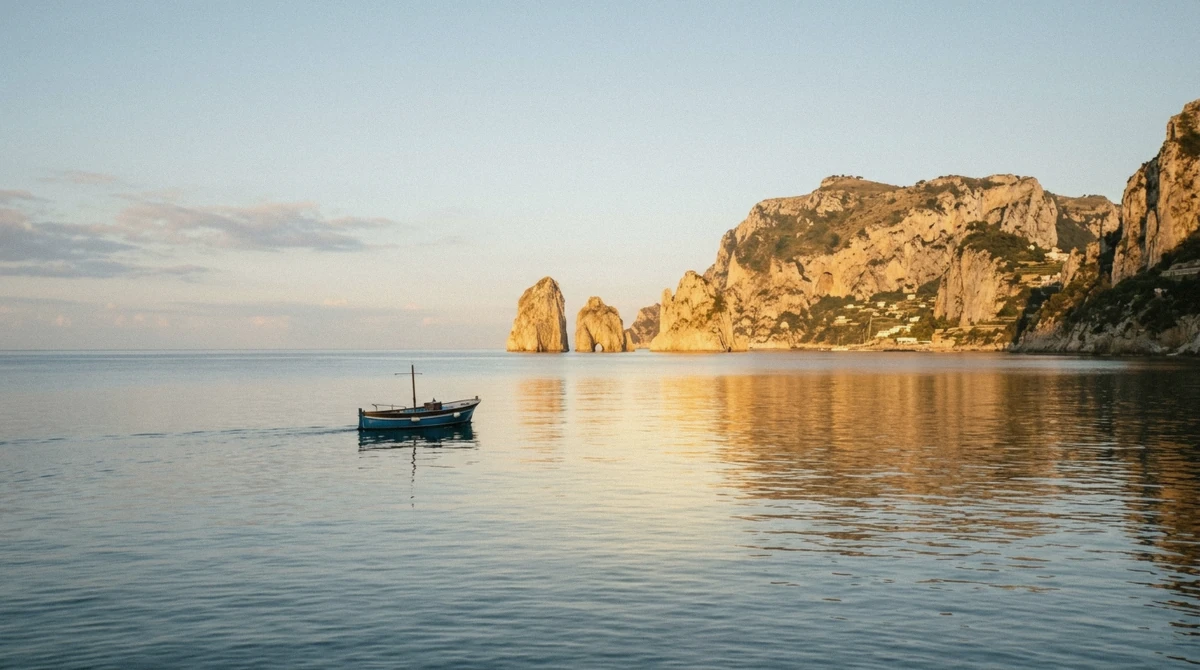
The water everyone is actually buying: flat, gold, and empty before nine.
Quick answer May and late September sail calmest, mornings beat crowds, the grotto needs flat sea
May is the best month to visit Capri by boat, with calm warming water, moderate crowds and the grotto usually open. Late September is the close second, with the sea at its warmest and crowds easing after mid-month. Within any day, a morning departure beats the afternoon: the water is flatter, the grotto queue shorter and the midday sun less brutal. The Blue Grotto only opens in calm-sea windows and closes without notice, so treat it as conditional on any listing, from the budget island loop to a private boat tour of Capri. From November to February many shared services slim down to weekends, so the practical season runs roughly March to October.
Key takeaways
- Aim for May or the second half of September for the best mix of calm water, open grotto and movable crowds.
- Take the earliest departure you can, since morning runs find flatter water and shorter grotto lines.
- If the wind cancels the day, most listings in the complete Capri boat tours catalog with prices offer an alternative date or a full refund.
- The grotto mechanics: how the visit works.
- Private option: what a charter really costs.
The Short Answer
May wins. The water is calm and warming, the crowds are moderate and the Blue Grotto is normally open. Late September runs a very close second, with the sea at its warmest for the year and the summer pressure easing after mid-month.
June is excellent early on and turns to July-level demand by mid-month. July and August are beautiful on paper and the busiest water of the year, so they demand weeks of lead time and a tolerance for company. October is quiet and clear but carries the first storms, and any storm day can shut the grotto.
In short, the best time to visit Capri by boat is the shoulder, and the best hour is the morning.
The Season at Sea Level
The island loop is a single circuit of roughly 20 km of coastline, taking an hour nonstop. With grotto entries, a swim stop and photo time, the usual range is two to three hours on the water. That is a short enough trip that sea state, not distance, decides how it feels.
The boat season runs roughly March to October. From November to February many shared services slim down to weekends, the Monte Solaro chairlift closes for part of the winter, and the crossings turn cold. Ferries still connect the island all year from Sorrento in about 20-25 minutes, from Positano in around 30, and from Naples in 45-90 minutes depending on the vessel, so an off-season visit is possible, just thinner on options.
Swimming off the boat is allowed almost everywhere along the coast, and the sea is at its warmest in September. One rule holds in every month: no swimming inside the Blue Grotto, where only the official rowboats operate.
The sailing year at a glance, read from island climate normals and the ferry calendar: the shoulder months carry the best mix of calm water, open grotto and movable crowds.
| Month | Sailing | Crowds | The catch |
|---|---|---|---|
| May | calm, warming | moderate | nothing, this is the month |
| June | calm and warm | building | July-level demand by mid-month |
| July | calm, hot | peak | book weeks ahead, midday sun is brutal |
| August | calm, hottest | peak | the busiest water of the year |
| September | calm, sea at its warmest | easing after mid-month | first storms arrive late |
| October | still warm, clearer light | thin | storm days close the grotto |
| November to April | weather-dependent | minimal | slimmed schedules, chairlift shut, cold crossings |
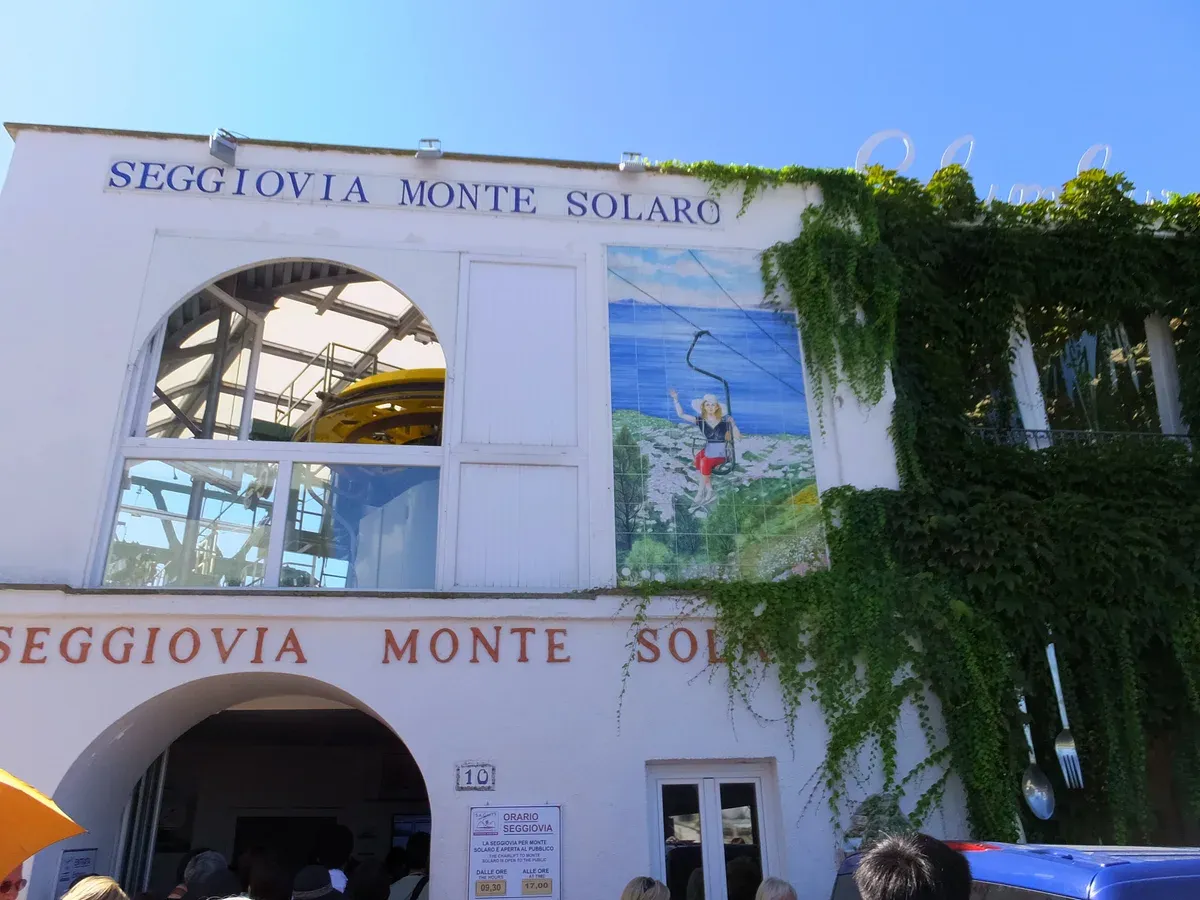
The chairlift that decides the winter: shut January through early February. Photo: lienyuan lee, CC BY 3.0, via Wikimedia Commons
The Grotto Season Is Not the Calendar
The Blue Grotto is a separate sea cave on the northwest coast, entered by small rowboat through a mouth about two metres high. Rowboats operate only when there is no swell and no southerly wind, and the cave can close without notice on rough mornings, in any month. A clear summer day with a southerly breeze can shut it while the rest of the coast is perfect.
Every grotto stop in this comparison is therefore conditional. If the sea gate is shut, the two-hour option on the island boat trip with grottos shortens to a plain one-hour circuit along the open coast.
Two money notes tie the grotto to timing. The rowboat entry is about €19 ($20.50), paid in cash to the grotto boatmen on site, and it is never part of a tour fare. Separately, disembarking on Capri costs a municipal landing fee of €5 ($5.40) per person from April to October and €2.50 ($2.70) from November to March.
Ferry tickets include the fee in the fare, while day-tour operators collect it separately in cash at check-in. For how the visit itself works, see Capri Blue Grotto Boat Tours: How the Visit Works.
The Crowd Clock: Hours That Decide the Day
The best time of day for a boat tour in Capri is the morning. The water is usually flattest, the Blue Grotto queue shortest and the midday sun avoided. The grotto-focused listing from Sorrento makes the logic explicit: its full-day option offers a 07:45 meeting to cut the queue, lining up at the cave entrance as soon as it opens.
Afternoons bring heat, chop and the most hulls around the Faraglioni. Sunset options exist, such as the Sorrento departure that meets at 4:00 pm at Bar Ruccio in Marina Piccola, and they trade the swim stops for golden light and thinner water.
- First boats out: flattest sea and the shortest grotto wait, worth the early alarm in any month.
- Midday: hot, busiest and most exposed, the slot to avoid in July and August.
- Late afternoon and sunset: cooler light and fewer boats, but swim stops get shorter and the option list thins outside high season.
Crowds also scale with the format. A shared loop can mean 10 to 12 guests, while every Capri boat tour and its price includes private charters where your party owns the deck. In peak season a private three-hour gozzo is the only way to escape the cluster around the famous rocks, short of going in the off-season.
How Prices Move Through the Year
Listed from-prices barely move between months, but two things do: availability and all-in cost. In July and August the most-booked departures sell out weeks ahead, while the off-season shrinks the schedule itself. Read the mandatory fees before you book, because they change the picture more than the calendar does.
The shared day from Sorrento or Positano lists at $86.90 and carries $94.84 of mandatory embark, disembark and welcome fees, so it is really a $181.74 day. The grotto day from Sorrento lists at $114.71 with a $21.71 service fee, $136.42 all-in, plus the grotto rowboat ticket on site. The full-day Sorrento boat tour with swim stops and light lunch lists at $137.88 with an $11.43 destination fee in cash at check-in.
Format sets the floor and the ceiling. The cheapest way onto the water is the island loop from Marina Grande at $32, while the private three-hour gozzo starts at $509.81 per boat with $20.57 of mandatory extras, $530.38 all-in. The landing fee also moves by season, at €5 from April to October and €2.50 from November to March.
Booking 24 hours out is possible on most listings since free cancellation up to 24 hours before is standard, but in peak season treat that as a floor, not a plan.
When the Wind Cancels the Day
The sea, not the operator, makes the call. How rough it gets depends on wind direction more than season. Southerly wind and swell shut the Blue Grotto rowboats and can close the grotto without notice, while stronger systems cancel crossings entirely.
Tours screen by sea state on the morning itself, and some operators flag their loops as unsuitable for travellers prone to seasickness for exactly this reason. The crossing from Naples is the longest at 45-90 minutes, so it feels any chop most, while Sorrento to Marina Grande takes about 20-25 minutes.
If the wind cancels your day, here is the playbook. Most listings in this comparison offer an alternative date or a full refund when weather cancels the trip, and free cancellation up to 24 hours before applies across the board, so rebook rather than eat the loss. Go to a backup: the island loop runs a shortened open-coast circuit when the grotto is shut, and a bad morning often calms by afternoon.
Swap a water day for land, riding the Monte Solaro chairlift from Piazza Vittoria in Anacapri at €14 round trip, about 13 minutes each way, or wander Capri town. Know your piers for the rebooking: tours from the island meet at Marina Grande, including the small-group loop that checks in under the white umbrellas near the Da Francuccio restaurant at the Capri Tourist Port, and one listing moves its winter meeting point to the Lase Capri ticket office at Via Cristoforo Colombo 69 from November through March. Sorrento departures gather at Marina Piccola, at the square between La Scogliera Kitchen & Bar and Ruccio Restaurant for the grotto day, and the Naples option includes transfers to a fixed meeting point.
Arrive 15 minutes early, since late arrivals are not admitted on the small-group loops.
The Sea Calendar: Scirocco, Mistral and the Calm Windows
On Capri the sailing year is written in wind directions, and the island record points at one culprit above all: the southerly. That is the scirocco, and it owns the Blue Grotto. The rowboats enter the cave through a mouth about two metres high, so any swell or southerly wind shuts the sea gate, sometimes without notice on a morning that looked fine from the piazza.
A clear summer day with a light scirocco can close the cave while the rest of the coast stays perfect. Every grotto stop in this comparison is therefore conditional, and stronger systems of any direction cancel the sailings themselves, which is why operators screen by sea state on the morning rather than the night before.
| Condition | Effect | Where it bites | The practical answer |
|---|---|---|---|
| Southerly wind and swell | Shuts the Blue Grotto rowboats, sometimes without notice | The northwest coast and the cave mouth | Expect the shortened open-coast loop, the two-hour island circuit running one hour instead |
| Storm days | Close the grotto and can cancel sailings | Late September onward, especially October | Rebook, since most listings offer an alternative date or a full refund |
| Calm morning | Flattest water and the shortest grotto queue | Every month that sails | Take the earliest slot, such as the 07:45 grotto meeting from Sorrento |
| The calm windows | Calm warming sea, moderate pressure | May, and late September | The sea is at its warmest in September, crowds ease after mid-month |
The mistral, the cold northwesterly of these waters, is not described in the island material on this page, so plan around what is documented. Read the year this way and the planning simplifies. May and the second half of September are the stretches where calm water and an open grotto most often line up.
October is quiet and clear but carries the first storms. From November to February the shared schedule itself thins to weekends, so the calm-window logic matters less than the timetable.
Reading the Morning Forecast Like an Operator
Tours make the go or no-go call on the sea state of the morning itself, not on a town forecast the evening before. The signals you can check from shore are simple. Southerly wind or visible swell means the Blue Grotto will be shut, whatever the sun is doing.
A forecast for rough seas means the crossing may be cancelled, and the longest crossing feels it first. The ferry from Naples takes 45-90 minutes depending on the vessel, so that route chops up before the 20-25 minute hop from Sorrento or the roughly 30 minutes from Positano.
- If the forecast shows southerly wind, book a loop without a grotto stop, or accept the shortened circuit, since the two-hour island option runs one hour along the open coast when the cave is shut.
- If the morning looks marginal, pick a listing with same-day flexibility. Free cancellation up to 24 hours before is standard, so you can move to the following day at no cost.
- Prone to seasickness? Several listings flag their loops as unsuitable for you in rough water, so the shared gozzo days with a swim stop are the ones to screen hardest.
- A rough morning often calms by afternoon, so ask about the later departure before writing the day off. The small-group loop from Marina Grande checks in under the white umbrellas near the Da Francuccio restaurant at the Capri Tourist Port, with an example departure at 1:30 pm.
- In winter, note the moved meeting point. From November through March one island listing gathers at the Lase Capri ticket office at Via Cristoforo Colombo 69 instead of the pier.
Arrive 15 minutes before departure, since late arrivals are not admitted on the small-group loops and the operator only tries to reschedule when it can. And if the day is cancelled outright, most listings offer an alternative date or a full refund, so the risk of a wind day is a lost morning, not a lost fare.
Shoulder-Season Prices and the Booking Window
The from-prices barely move between months, so the shoulder-season saving is really about three things: availability, the landing fee and how close to the date you can safely book. In May and the second half of September the most-booked departures still have space on shorter notice, while July and August sell out weeks ahead. The municipal landing fee also halves out of season, at €5 ($5.40) per person from April to October and €2.50 ($2.70) from November to March, though from-prices are set per listing rather than per month.
| Listing | From-price | All-in reality | Why it matters in shoulder season |
|---|---|---|---|
| Island loop with grottos from Marina Grande | $32 | $32, no added fees | The cheapest water in any month, and the easiest to book late in May |
| Two-hour small-group swim loop from Marina Grande | $103.12 | $103.12, no added fees | Caps at 12 guests, so shoulder-season space goes first |
| Shared day from Sorrento or Positano | $86.90 | $181.74 with $94.84 of mandatory fees | The fee gap between the headline and the real price is the number to plan around |
| Grotto day from Sorrento | $114.71 | $136.42 with a $21.71 service fee, plus the grotto rowboat ticket | Add the about €19 ($20.50) cash entry only in months when the cave is likely open |
| Private three-hour gozzo | $509.81 | $530.38 with $20.57 of mandatory extras | Per boat, so per person it falls as your group grows, whatever the month |
The booking window scales with the month. In peak season treat the 24-hour cancellation deadline as a floor, not a plan, and lock weeks ahead. In May and late September, booking inside the free-cancellation window is a realistic strategy, since you can hold a departure and shift it if the forecast turns.
Questions Travellers Ask
What is the best month to visit Capri?
May, for calm warming water, moderate crowds and a grotto that is usually open. Late September is the runner-up, with the sea at its warmest and crowds easing. You can compare every month side by side in the complete Capri boat tours catalog with prices.
What is the best time of day for a boat tour in Capri?
The morning. The sea is flattest, the Blue Grotto queue is shortest and you dodge the brutal midday sun. The grotto day from Sorrento offers a 07:45 meeting for exactly this reason, and Capri boat tours from Sorrento: every departure compared shows which listings sail earliest.
How rough is the sea to Capri?
In the main season the crossings are usually calm, and the shortest hop from Sorrento takes about 20-25 minutes. Southerly wind and swell bring chop, shut the Blue Grotto rowboats and can cancel sailings without much notice. Operators screen by sea state on the morning itself.
Is Capri worth visiting by boat?
Yes, because the island's headline sights, the Faraglioni, the grottos, the Natural Arch and Villa Malaparte, line a single 20 km loop that reads best from the water. Even a two-hour small group boat ride with swimming and limoncello covers the circuit with a swim stop. Timing it in May or late September makes the difference between a shared cove and a crowded one.
Can you sail to Capri in winter?
The ferries never stop, but the tours mostly do: from November to March the shared days run on winter schedules at best, the chairlift closes, and the grotto sits shut for weeks at a time. A winter visit means the ferry, a coat, and the town, which is a different and much quieter trip.
Which month has the calmest sea?
May and September are the calmest bets, with May offering calm warming water and September the warmest sea of the year plus crowds that ease after mid-month. Calm is still a window rather than a guarantee, since a southerly can shut the grotto in any month. For how each month compares, see the month table in the complete Capri boat tours catalog with prices.
Is October warm enough to swim?
Yes. October is described as still warm with clearer light, and swimming off the boat is allowed almost everywhere along the coast. The trade-off is the first storms, which can close the grotto or cancel a sailing on short notice. Most listings offer an alternative date or a full refund if the weather wins.
How windy is too windy for the island loop?
The threshold is sea state, and the clearest marker is southerly wind or swell, which shuts the Blue Grotto rowboats. Stronger systems cancel the loop itself, and operators screen on the morning rather than in advance. The shortest crossing, about 20-25 minutes from Sorrento, feels any chop least, while the 45-90 minute Naples route feels it most.